#6: Taking Back Our Data: Digital Security for Artists & Activists
December 2025
Zine by Kelly Baker, based on a conversation with René Pérez
Every second that we check the weather app, open an email, or do a Google search, we are offering up piles of our personal data to Big Tech. We lie and say "oh yeah, I read those Terms of Services, sure!" and we tell those apps to go ahead and take our information from us.
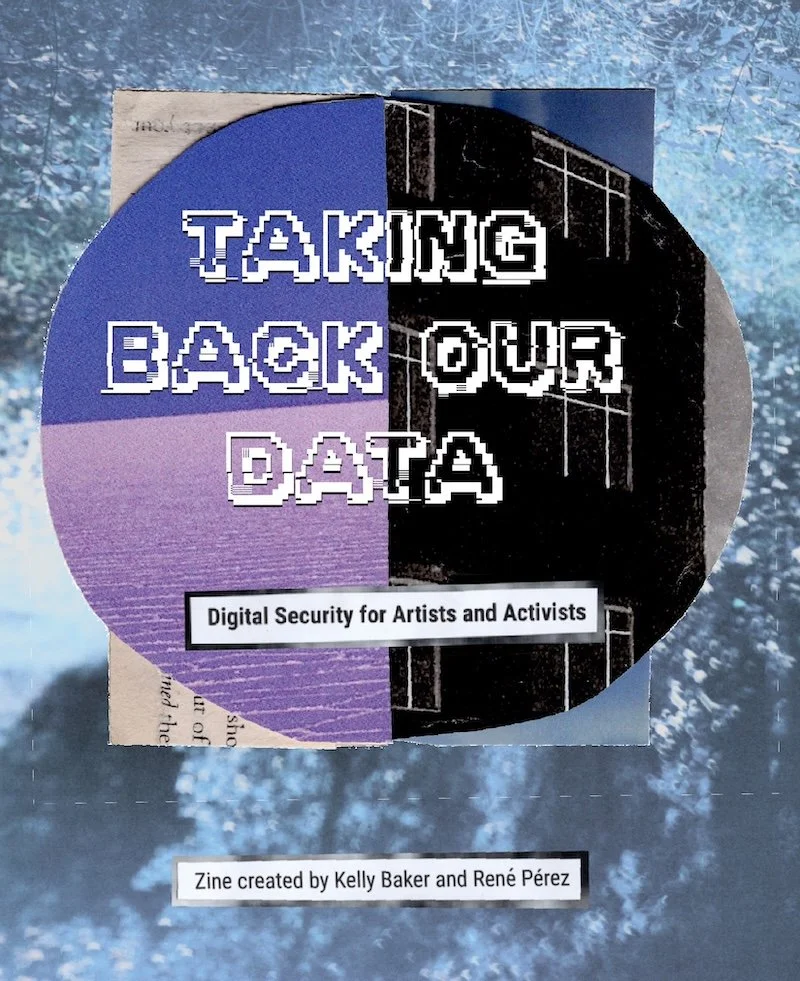
click here to read the zine!
I attended a digital security workshop many years ago. As I learned how much of our data is being tracked, bought and sold– all I could think was:
“They already have all my data. I’m too far gone.”
I felt like I was already compromised, so what was the point of even trying?
In recent years, though, I have shifted my thinking. Sure, most companies and my own government know what I buy, where I travel, who I communicate with. But I can start to opt out in both small and meaningful ways.
And, as our country descends into fascism, it has become clear that it is imperative to do so.
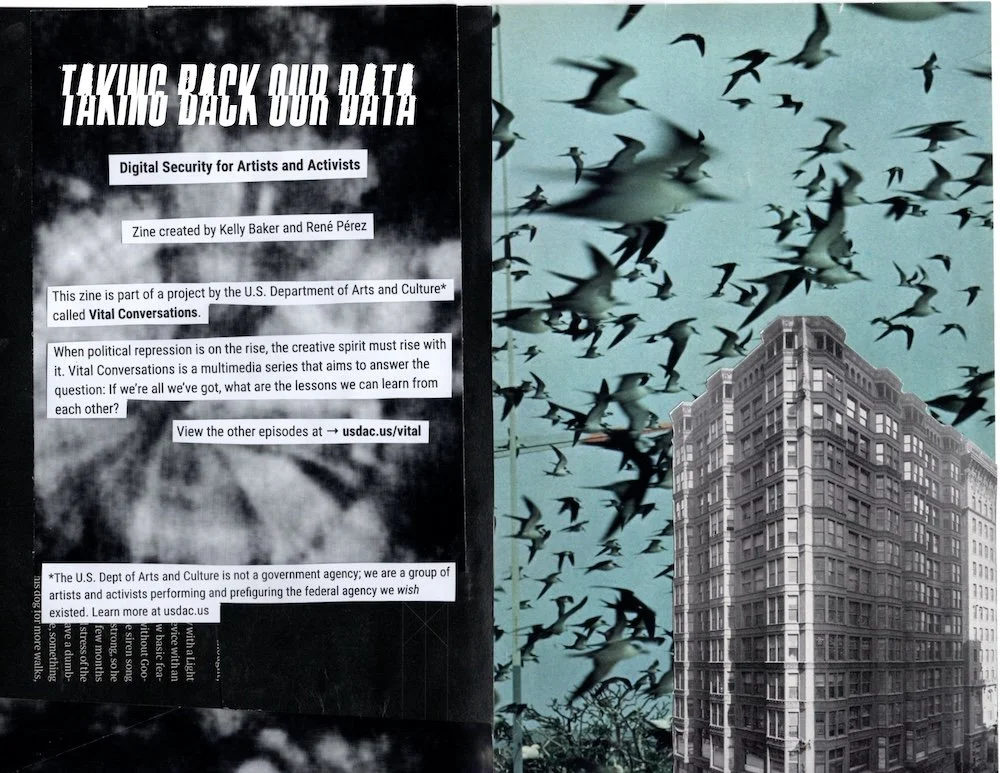
My friend René Pérez works in tech at the Climate Justice Alliance, and he's been a longtime advocate for digital security. A couple months ago, I asked him if he'd do a zine with me on the topic. I wanted to know:
If we already feel overwhelmed by how much of our data is already out there, or for those of us who don't have the energy to overhaul our entire digital lives... where do we start?
The zine we are offering here is the sixth installment in the USDAC's Vital Conversations series, and we hope it helps you feel more equipped to protect your data.
As I learned how much of our data is being tracked, bought and sold– all I could think was: “They already have all my data. I’m too far gone.” I felt like I was already compromised, so what was the point of even trying?
We know our own government is watching us, and this administration is not even pretending otherwise. While I’d like to believe we still have freedom of speech, we are seeing that erode in alarming ways.
We know ICE is investing tens of millions in spy technology, including social media monitoring and cellphone location tracking. Our phones can be searched at the border. And we have seen examples of people’s political beliefs and social media posts being used as grounds for detainment, arrest, and deportation.
In the digital age, we also know that phishing attacks and scams are getting more sophisticated. Many of us rely on weak and re-used passwords, even though we are one vulnerable password away from identity theft.
We don’t have to let perfection be the enemy of good when it comes to digital security.
What are proactive measures we can all take to protect ourselves and our data? I am not interested in spreading fear or stoking anxiety. I would instead offer this as an invitation for all of us to become better informed digital citizens.
You may, like me, initially feel overwhelmed and not know where to start. But I believe we don’t have to let perfection be the enemy of good when it comes to digital security. Here’s how.
View the full zine below.
Click here to download a free printable version of the zine.
Print instructions: Portrait mode, Double-sided (flip on short edge)
Additional Resources for Digital Security
Advice & Recommendations:
Activist Digital Security Checklist
Digital Security for Activists on the Go (Zine by 18 Million Rising)
Preparing Devices for Travel through a US Border (Article by Freedom of the Press Foundation)
Liberation Toolbox (How to break up with Big Tech by YK Hong)
Risk Assessment:
Reflecting on Existing Security Practices (Reflection exercise by Tactical Tech Collective)
Risk Assessment Tool for Activists (PDF by Wildseed Society)
Fact Checking:
Tools:
Signal (Messaging App)
Tor Project (Browser)
Easy Opt Outs (Personal data removal service)
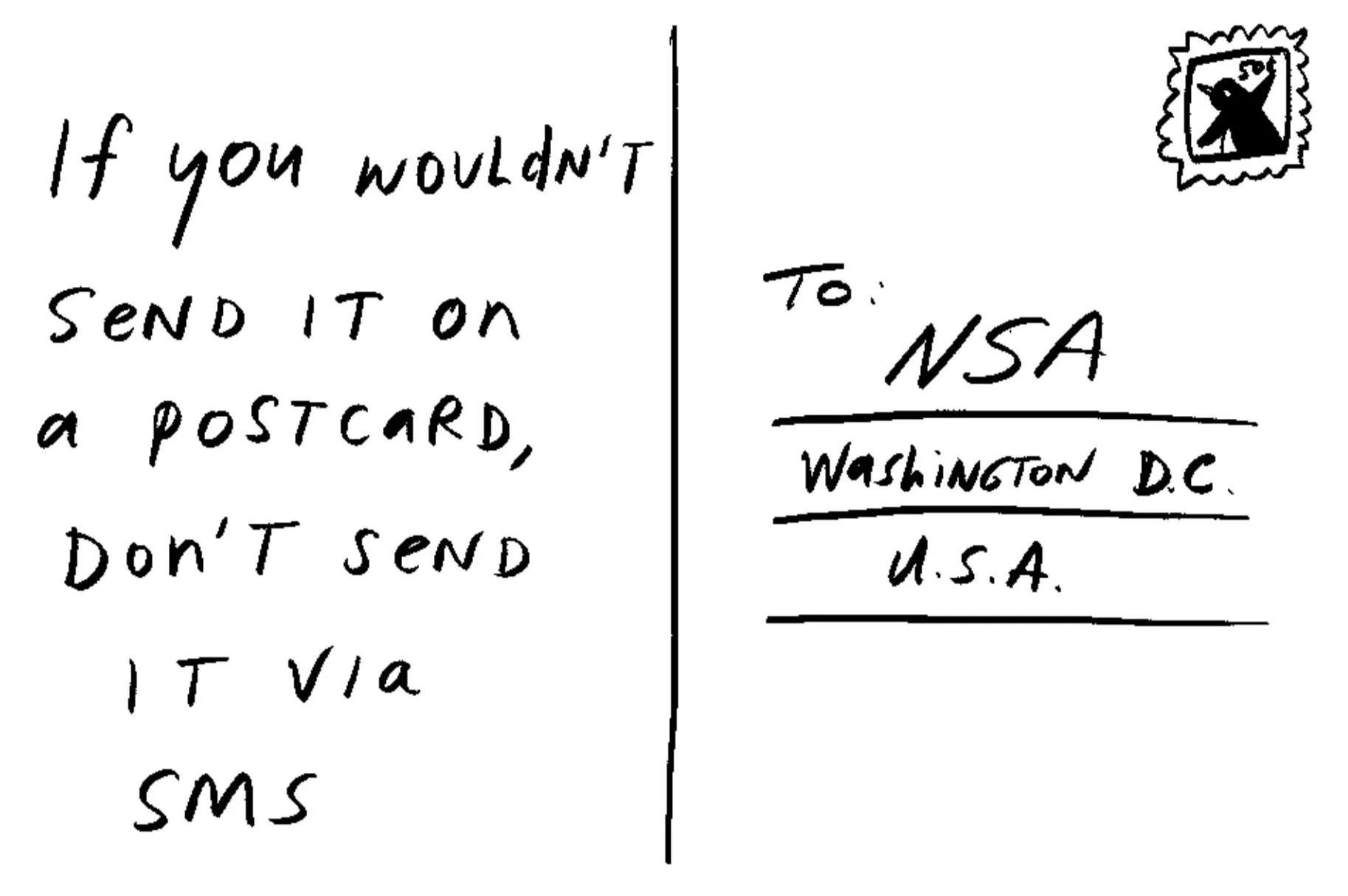
Do you have additional recommendations for this resource list? Let us know!